Writing Paragraphs
During this class we will master the following types of paragraphs:
- Simple 5-Sentence Paragraphs
- Academic 5-Sentence Jane Schaffer Paragraphs
Students are highly encouraged to use our educational chatbot, “ESL Paragraph Master” to practice and improve their sentence writing skills:
ESL Paragraph Master
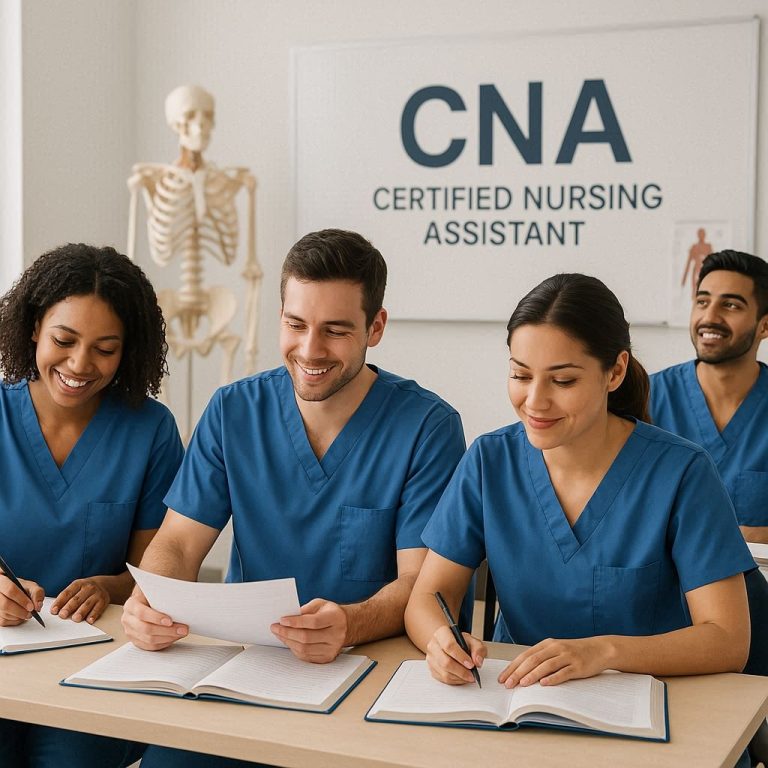
Writing Five-Sentence Paragraphs in Healthcare: A Guide for Certified Nursing Assistant Students
Effective written communication is a critical skill for Certified Nursing Assistants (CNAs) in today’s healthcare environment. Whether documenting patient care, writing incident reports, completing care plans, or communicating with healthcare team members, CNAs must be able to express their observations and thoughts clearly and professionally. The five-sentence paragraph structure provides an excellent framework for organizing healthcare-related writing, ensuring that important information is communicated effectively while maintaining the clarity and precision required in medical settings.
Why Paragraph Writing Matters for CNAs
Professional Documentation Requirements
In healthcare settings, CNAs regularly create written documentation that becomes part of permanent medical records. These documents must be clear, accurate, and well-organized because they serve multiple purposes: they provide continuity of care between shifts, offer legal protection for both patients and healthcare workers, and help other team members understand patient status and needs. Poor writing can lead to miscommunication, delayed care, or even legal complications.
Communication with Healthcare Teams
CNAs frequently need to communicate observations, concerns, and recommendations to nurses, physicians, and other healthcare professionals. Well-structured paragraphs help ensure that critical information is conveyed effectively and that the CNA’s professional voice is heard and respected within the healthcare team.
Academic and Continuing Education Success
Many CNAs pursue additional education and certifications throughout their careers. Strong paragraph writing skills are essential for success in nursing school applications, continuing education courses, research papers, and professional development activities.
Simple Five-Sentence Paragraphs in Healthcare Contexts
Definition and Healthcare Applications
The simple five-sentence paragraph in healthcare writing consists of a topic sentence that introduces the main point, three supporting sentences that provide specific details or evidence, and a concluding sentence that reinforces the main idea. This structure is particularly useful for patient care documentation, incident reports, care plan updates, and communication with supervisors.
Structure for Healthcare Writing
- Topic sentence – States the main observation, concern, or recommendation
- Supporting detail 1 – Provides specific evidence or first key point
- Supporting detail 2 – Offers additional evidence or second key point
- Supporting detail 3 – Includes final evidence or third key point
- Concluding sentence – Summarizes findings or recommends next steps
Example 1: Patient Observation Documentation
Topic: Changes in Patient Mobility
Mrs. Johnson’s mobility has significantly declined over the past three days, requiring increased assistance with activities of daily living. On Monday, she was able to walk to the bathroom independently using her walker, but today she requires assistance from two staff members to stand and transfer safely. Her gait has become unsteady, and she reports increased pain in her right hip when bearing weight, rating it as 7 out of 10 on the pain scale. Additionally, she has experienced two near-falls when attempting to get out of bed without calling for assistance, despite repeated reminders about fall precautions. These changes in mobility status require immediate evaluation by the nursing staff and possibly the physician to determine appropriate interventions.
Analysis:
- Topic sentence: Clearly states the main concern (declining mobility)
- Supporting detail 1: Specific comparison showing functional decline
- Supporting detail 2: Objective observation about gait and pain
- Supporting detail 3: Safety concerns with documented incidents
- Concluding sentence: Recommends necessary follow-up actions
Example 2: Incident Report Documentation
Topic: Medication Error Prevention
The medication administration process in our unit requires immediate attention to prevent potential errors and ensure patient safety. Yesterday, I observed that several medications were left on patient bedside tables rather than being administered directly by nursing staff, creating risk for missed doses or accidental ingestion by confused patients. The medication cart was also left unlocked and unattended in the hallway for approximately ten minutes while the nurse responded to a call light in another room. Furthermore, I noticed that two patients had medications with similar names placed adjacent to each other in the medication drawer, which could easily lead to selection errors during busy periods. These observations suggest that our unit would benefit from additional training on medication safety protocols and perhaps revision of our current procedures.
Analysis:
- Topic sentence: Identifies the main safety concern
- Supporting detail 1: Specific unsafe practice observed
- Supporting detail 2: Security breach with potential consequences
- Supporting detail 3: Environmental factor increasing error risk
- Concluding sentence: Suggests constructive solutions
Example 3: Care Plan Update
Topic: Nutrition and Hydration Support
Mr. Rodriguez requires enhanced nutritional support to address his recent weight loss and poor oral intake. His food consumption has decreased to less than 25% of meals over the past week, and he has lost four pounds since his admission ten days ago. He consistently refuses solid foods but shows more interest in liquid nutritional supplements, especially when they are offered at room temperature rather than chilled. His family has indicated that he particularly enjoyed homemade smoothies before his hospitalization, and they are willing to bring approved ingredients for the dietary department to prepare. Implementing a nutrition plan that incorporates these preferences while meeting his dietary restrictions could significantly improve his nutritional status and overall recovery.
Analysis:
- Topic sentence: States the nutritional concern and need for intervention
- Supporting detail 1: Quantifies the problem with specific measurements
- Supporting detail 2: Identifies preferences that could be leveraged
- Supporting detail 3: Includes family resources and support
- Concluding sentence: Proposes solution incorporating gathered information
Jane Schaffer Paragraphs in Healthcare Education
Definition and Medical Education Applications
The Jane Schaffer paragraph model in healthcare education helps CNA students develop analytical thinking skills essential for clinical reasoning and evidence-based practice. This structured approach teaches students to examine healthcare situations critically, support their observations with concrete evidence, and analyze the significance of their findings in relation to patient care and safety.
Healthcare-Specific Structure
- Topic Sentence (TS) – States a claim or position about a healthcare issue
- Concrete Detail (CD) – Provides specific evidence (observations, data, research)
- Commentary 1 (CM1) – Explains how the evidence supports the topic sentence
- Commentary 2 (CM2) – Analyzes broader implications for patient care or practice
- Concluding Sentence (CS) – Reinforces the main argument and suggests implications
Example 1: Infection Control Analysis
Topic: Hand Hygiene Compliance in Long-Term Care
Consistent hand hygiene practices among healthcare workers are essential for preventing healthcare-associated infections in long-term care facilities. Research published in the American Journal of Infection Control shows that hand hygiene compliance rates in nursing homes average only 60%, significantly below the recommended 95% compliance rate established by the Centers for Disease Control and Prevention. This low compliance rate is particularly concerning because it directly correlates with increased transmission of infectious diseases among vulnerable elderly residents who already have compromised immune systems. The gap between recommended and actual practice suggests that current education and monitoring systems are inadequate, and facilities must implement more effective strategies such as real-time feedback systems and peer accountability programs. Therefore, improving hand hygiene compliance should be a top priority for all healthcare workers in long-term care settings to protect patient safety and reduce preventable infections.
Analysis:
- TS: Makes a clear claim about hand hygiene importance
- CD: Provides specific research data and standards
- CM1: Explains why low compliance is dangerous for this population
- CM2: Analyzes systemic issues and potential solutions
- CS: Reinforces the urgency and responsibility of healthcare workers
Example 2: Pain Management Analysis
Topic: Non-Pharmacological Pain Management Techniques
Certified Nursing Assistants play a crucial role in implementing non-pharmacological pain management interventions that can significantly improve patient comfort and reduce reliance on medications. Clinical studies demonstrate that techniques such as repositioning, heat and cold therapy, and distraction methods can reduce patient-reported pain scores by an average of 2-3 points on a 10-point scale when used consistently by trained CNAs. This reduction is clinically significant because it represents meaningful pain relief that can improve patient mobility, sleep quality, and overall satisfaction with care. The effectiveness of these interventions also highlights the importance of CNA training in comfort measures and the need for healthcare teams to recognize CNAs as valuable contributors to comprehensive pain management plans rather than simply medication administrators. Consequently, healthcare facilities should invest in training CNAs in evidence-based comfort measures and empower them to use these techniques as part of routine patient care.
Analysis:
- TS: Establishes CNAs’ important role in pain management
- CD: Provides specific research evidence about effectiveness
- CM1: Explains the clinical significance of the pain reduction
- CM2: Discusses broader implications for CNA role and team dynamics
- CS: Calls for institutional support and empowerment
Example 3: Fall Prevention Analysis
Topic: Environmental Modifications for Fall Prevention
Environmental modifications in patient rooms represent one of the most effective strategies for preventing falls among elderly residents in healthcare facilities. A comprehensive study of 200 nursing home residents found that rooms equipped with motion-sensor lighting, non-slip flooring, and strategically placed grab bars experienced 40% fewer fall incidents compared to standard rooms over a six-month period. This significant reduction occurs because environmental modifications address multiple fall risk factors simultaneously, including poor lighting that contributes to disorientation, slippery surfaces that cause loss of footing, and lack of support structures that patients instinctively reach for when feeling unsteady. The success of environmental interventions also demonstrates that fall prevention requires a proactive, systematic approach rather than relying solely on individual patient education or restraints, which often prove ineffective or even counterproductive. Healthcare facilities should therefore prioritize environmental assessments and modifications as a fundamental component of their fall prevention programs to create safer environments for all residents.
Analysis:
- TS: Identifies environmental modifications as effective fall prevention
- CD: Provides specific study results with quantifiable outcomes
- CM1: Explains why environmental changes are effective
- CM2: Contrasts systematic approach with individual-focused methods
- CS: Recommends institutional policy changes
Adapting Paragraph Structure for Different Healthcare Documents
Patient Care Documentation
When documenting patient care, simple five-sentence paragraphs work best because they allow for clear, factual reporting without excessive analysis. Focus on objective observations, specific measurements, and concrete actions taken. Avoid subjective language and ensure that each supporting sentence provides different types of evidence or observations.
Template for Patient Care Documentation:
- Topic sentence: State the patient issue or status
- Supporting detail 1: Provide objective measurements or observations
- Supporting detail 2: Include patient’s subjective reports or behaviors
- Supporting detail 3: Document interventions attempted or needed
- Concluding sentence: Summarize current status or recommend next steps
Incident Reports
Incident reports benefit from simple paragraph structure with emphasis on factual, chronological documentation. Avoid speculation about causes and focus on observable facts, times, and circumstances.
Template for Incident Reports:
- Topic sentence: Briefly describe what happened
- Supporting detail 1: Provide specific time and location details
- Supporting detail 2: Describe circumstances leading to incident
- Supporting detail 3: Detail immediate response and actions taken
- Concluding sentence: State current patient status and follow-up needed
Academic Assignments
For nursing school applications, continuing education papers, or research projects, Jane Schaffer paragraphs help demonstrate analytical thinking and evidence-based reasoning valued in healthcare education.
Template for Academic Healthcare Writing:
- Topic sentence: Make a claim about healthcare practice or policy
- Concrete detail: Provide research evidence, statistics, or case studies
- Commentary 1: Explain how evidence supports your claim
- Commentary 2: Analyze broader implications for patient care or practice
- Concluding sentence: Reinforce argument and suggest applications
Common Healthcare Writing Challenges for CNAs
Medical Terminology Integration
CNAs must balance using appropriate medical terminology with clear communication. When writing for diverse audiences (family members, supervisors, healthcare team), consider your reader’s knowledge level and define technical terms when necessary.
Solution: Use medical terms accurately but include brief explanations in parentheses when writing for mixed audiences. For example: “The patient exhibited dyspnea (difficulty breathing) during ambulation.”
Objective vs. Subjective Language
Healthcare documentation requires objective, factual language rather than personal opinions or interpretations. This can be challenging when CNAs want to express concerns or observations that seem important but aren’t easily quantifiable.
Solution: Focus on specific, observable behaviors and measurable changes. Instead of “Patient seems depressed,” write “Patient reports feeling sad, has decreased appetite (eating 25% of meals), and spends most of the day in bed with minimal social interaction.”
Legal and Ethical Considerations
All written documentation in healthcare settings has potential legal implications. CNAs must be accurate, honest, and professional in their writing while protecting patient privacy and confidentiality.
Solution: Stick to facts, avoid speculation, use professional language, and ensure all documentation follows HIPAA guidelines and facility policies.
Assessment Criteria for Healthcare Paragraph Writing
Simple Paragraph Evaluation
Effective simple paragraphs in healthcare contexts should demonstrate:
- Clarity: Main idea is immediately apparent and easily understood
- Accuracy: All facts and observations are correct and verifiable
- Completeness: Sufficient detail provided for proper understanding
- Professional tone: Language appropriate for healthcare setting
- Organization: Logical flow from topic to conclusion
Jane Schaffer Paragraph Evaluation
Strong analytical paragraphs in healthcare education should show:
- Evidence-based reasoning: Claims supported by credible research or data
- Clinical relevance: Analysis connects to actual patient care situations
- Critical thinking: Commentary demonstrates deeper understanding
- Professional application: Conclusions suggest practical healthcare implications
- Proper structure: Maintains required sentence types and ratios
Professional Development Through Writing
Building Communication Skills
Regular practice with structured paragraph writing helps CNAs develop the communication skills necessary for career advancement. Clear writing often reflects clear thinking, and both skills are essential for leadership roles in healthcare.
Documentation Competency
Strong documentation skills protect both patients and healthcare workers legally while ensuring continuity of care. CNAs who document thoroughly and professionally are valued team members and often considered for additional responsibilities.
Educational Opportunities
Many CNAs pursue additional education and certifications throughout their careers. The analytical writing skills developed through Jane Schaffer paragraph practice prepare students for success in nursing school and other advanced healthcare programs.
Conclusion
Mastering both simple and Jane Schaffer paragraph structures provides CNA students with essential tools for professional success in healthcare environments. Simple paragraphs serve the immediate needs of patient documentation and team communication, while Jane Schaffer paragraphs develop the analytical thinking skills necessary for evidence-based practice and continuing education.
The key to success lies in understanding when to use each format and practicing consistently with healthcare-relevant content. Simple paragraphs should be the primary tool for documentation and routine communication, while Jane Schaffer paragraphs are invaluable for academic work and professional development activities.
By developing strong paragraph writing skills early in their careers, CNAs position themselves for success not only in their current roles but also in future educational and professional endeavors. Clear, professional communication enhances patient care, strengthens team relationships, and opens doors for career advancement in the dynamic field of healthcare.